


Hi, I’m Hannah! Welcome to Nonlinear News, where I write for ambitious people with unconventional paths.
Follow me for ~weekly posts on pivots, portfolio careers, and personal brands.
Happy new year! I hope you got the chance to slow down, rest, and recharge in the last few weeks. I spent the holidays with family, enjoying great food and warm weather.
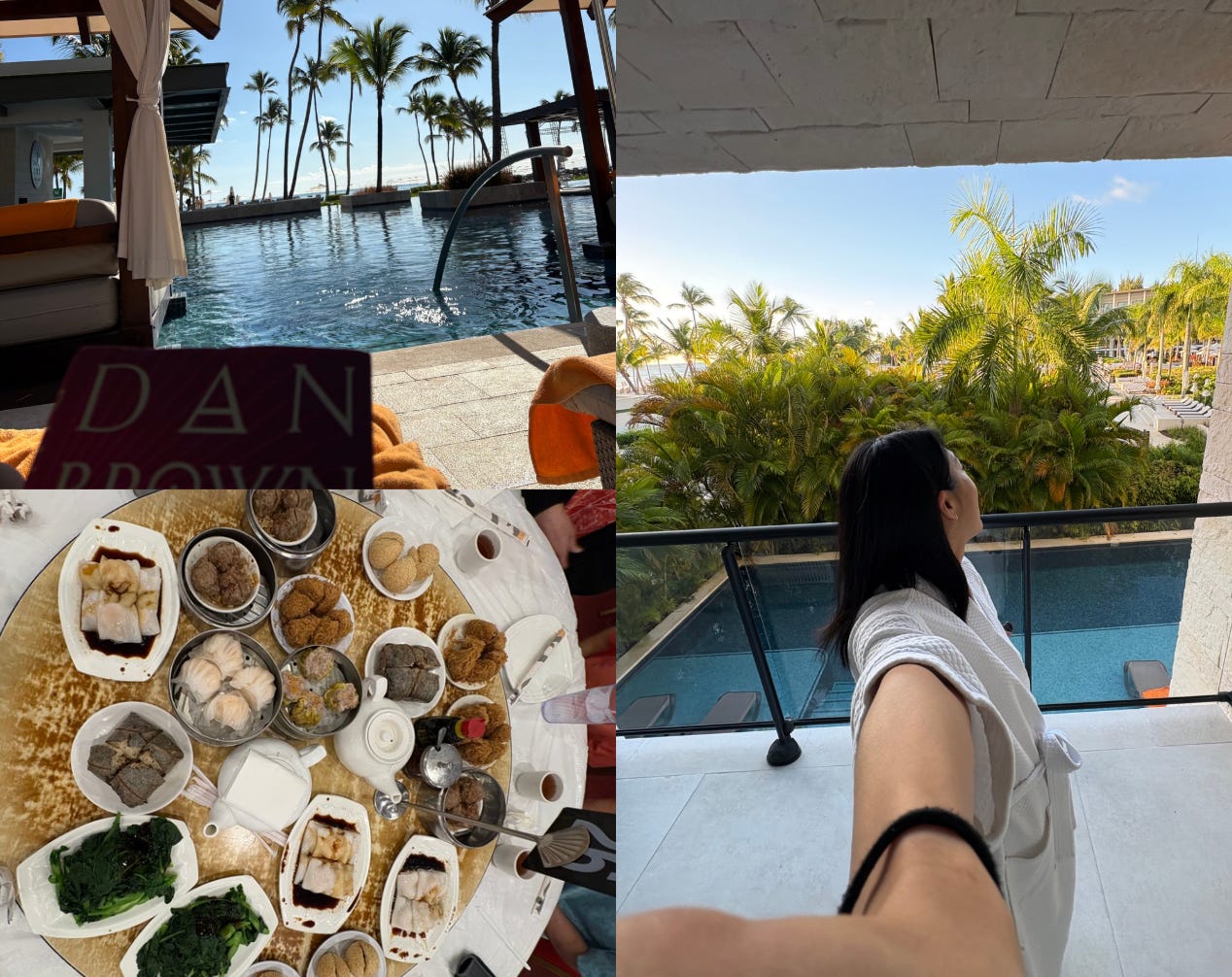
I got back to New York yesterday and had dinner with friends at Rubirosa, where a conversation about new years resolutions got me thinking about how I’ve spent most of my career maximizing for optionality.
One person asked if we had resolutions. Another said he doesn’t do resolutions. Instead, he picks a theme word to guide various aspects of his life. So I thought, what’s my word?
For 2025, my word was maximization.
(And experimentation and optionality. Am I really a maximizer if I pick just one word??)
I started creating content because I wanted optionality from my 9-5. I “brute forced” my way to 100K followers. My content strategy changed on a weekly basis, I got caught in comparison traps with other creators and responded to trends more than I focused on building for an audience.
I launched a newsletter after using a lead magnet to get a few thousand emails because I wanted optionality from algorithms.
I started posting on LinkedIn to diversify channels and got nowhere for months before finding my voice.
In many ways, this mirrors a pattern throughout my career.
I went into investment banking for the exit opportunities. When I pivoted into tech, I started in a product/ops role because it would allow me to go into the most things afterward. I got an MBA where the M could stand for “maximizer” given how common that tendency is among my classmates. Before business school, I applied to YC with a cofounder, struggling to narrow down on an idea because we had so many and couldn’t commit to one.
If you worked in banking, consulting, or tech, you probably know exactly what I’m talking about. You optimized for optionality at every turn. You picked the role with the most exit opportunities rather than the one you were most excited about. You’re five or ten years into your career and still “figuring it out.”
If you’re thinking about starting something - a business, a personal brand, a side project - it might be even worse. You have a list of 15 ideas and you’re researching all of them instead of committing to one. You’re consuming content about which niche to pick, which business model is best, which platform to build on.
I still find myself falling into the same trap, even after finding more focus in marketing and the creator economy, thinking: I could sell digital products, bootstrap a micro SaaS, get a full-time job in the creator economy, start a podcast…The options feel endless!!
The external environment doesn’t help. The world is full of trends and predictions, whether you’re curious about starting a company or pivoting to a new role. Everywhere you look, there’s something else you should be doing to become successful:
(These are all great pieces of content by the way - I highly recommend reading them to understand what’s happening in business and tech)
I’m also guilty of contributing to this, having shared a recent post read by 10,000 of you on 11 unconventional career paths for high performers.
But here’s what I’ve learned the hard way: keeping your options open is one of the most expensive things you can do in life.
I know this sounds backwards. We’ve been taught that optionality is smart - that the best move is to delay commitment until you have perfect information. Go into banking because the exit opportunities are unlimited. Get an MBA to pivot into anything. Take a generalist role to figure out what you want.
But what actually happens when you keep your options open is you don’t build anything. You spend years accumulating credentials and optionality while the people who picked a lane are compounding skills, reputation, and wealth in a specific direction.
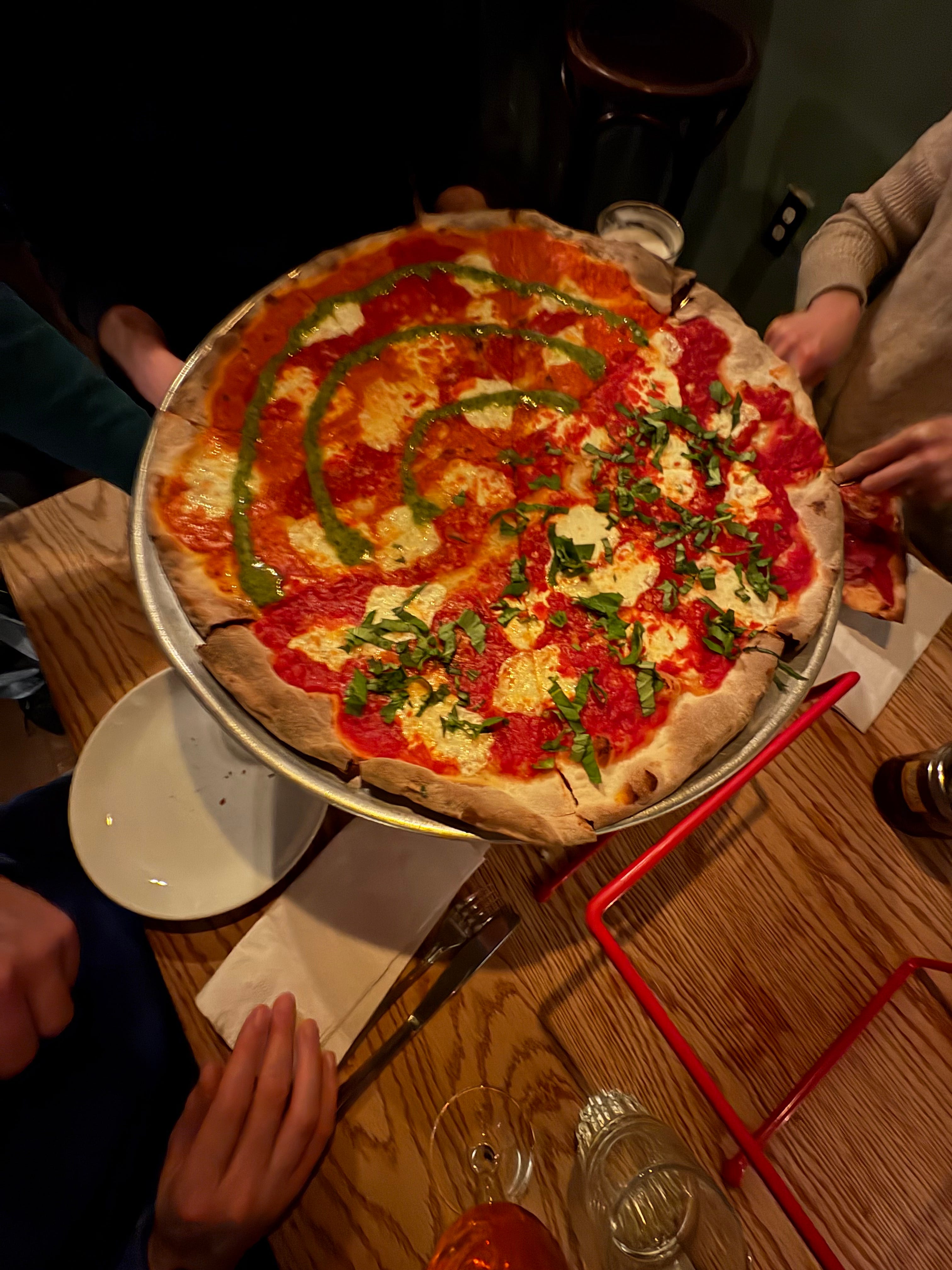
It’s like getting two pizza halves at Rubirosa because you want to try everything, then realizing one wasn't as good and you should have just gotten a whole tie-dye pizza. 😔
So my word for 2026 is FOCUS.
If you find yourself in a similar spot - many options, many ideas, not 100% sure on what path is right - here’s what I’ve learned about why we maximize and what’s actually helped me start choosing.
I know writing about “nonlinear careers” and focus may seem like oxymorons, but writing this piece made me realize that they’re two sides of the same coin. Nonlinear careers let us explore in order to find true focus.
Why we maximize
We’re afraid of choosing wrong (and not being able to go back)
Fear of choosing something irreversible has driven a lot of my decision making. Coming out of banking, I had two job options: a startup product/ops role at a global tech company, or a strategy role at a social enterprise in Southeast Asia. I picked the first because the second felt too pigeonholed. Then I ended up feeling pigeonholed anyway. The fear didn’t protect me from the outcome I was afraid of.
We compare ourselves to people on different paths
You see other people raise a $10M seed round or get a VP promotion in PE - people who seem to be “doing better” than you - and think, wow, I should do that. (This is exacerbated by social media.) But you don’t see the shit they slog through, the tradeoffs they made that you’d find unacceptable, or the day-to-day of the work that you’d hate if you were in their seat. The same path that makes one person successful can make the next person miserable.
We’re genuinely interested in many things
First, recognize this is a good thing - it means we embrace an abundance of opportunity and an open mind. Like many successful people with “founder, investor, advisor” on their LinkedIn profiles, we call ourselves multi-hyphenates or multi-passionate.
But what we often fail to see is that these people usually don’t start that way. For a long period, they were laser focused on doing one thing well. The multi-hyphenate identity came after they’d built credibility in one lane, not before.
Exploration is what we should be doing early in our careers. But at some point, we have to ask ourselves: am I still exploring, or am I just avoiding commitment?
One more question worth asking: is this a pattern in other aspects of your life?
Are you always trying to find the best restaurant, the best partner, the best apartment? I used to do this in dating before I met my current partner. Later I realized it was a combination of being younger and needing to see what’s out there (exploring), and that the people I was dating just weren’t the right fit. Once I met someone who was, the maximizing stopped. You might find the same is true in your career - you’re not indecisive, you just haven’t found the thing that makes the decision obvious.
What’s helped me find focus
Name the reason you can’t choose.
Does your inability to commit come from wanting to maximize learning and growth and try everything? Or does it come from comparing yourself to others who seem to be “doing better” and thinking you should be doing what they’re doing? These require different solutions. The first is about giving yourself a needed period of exploration. The second is about detaching your sense of progress from other people’s paths.
Go back to your Ikigai.
Ikigai is a Japanese concept that refers to the intersection of what you’re good at, what you love doing, what the world needs. I reorient around this all the time. I’m good at writing and storytelling, I love doing it, and this skill is more important than ever in the era of AI and personal brands. So this is what I’m focused on in 2026.
Challenge your assumptions about irreversibility.
Most decisions are reversible. Some aren’t - if you shut down a company and fire everyone, you can’t undo that. But if you quit a job, chances are you could go back if you have a strong network and reputation there. Maybe you think starting your own company means you’ll never have the stability of a 9-5 paycheck again. Not true - many ex-founders find their way back to company roles. We overestimate how permanent our choices are.
Calculate the cost of waiting.
Warren Buffett was able to compound ~$150Bn of wealth because he started investing when he was 11 years old. Same goes for your career. Every year you spend keeping your options open is a year you’re not compounding in a specific direction.
Read advice widely, but filter it ruthlessly.
Most people who create online amplify their own worldview through content to get you to follow them or buy something.
I do this too - I believe that monetizing your skills through a personal brand gives you greater financial freedom and leverage than staying silent in a corporate job. A different creator might think product management is the best career in tech, so their advice centers on why you should become a product manager.
Be wary of this when taking advice and wanting to maximize your options.
Write a manifesto.
No, not like the communist manifesto. Write an anchoring statement for what you want to accomplish this year in your life, career, or business. It can be a page or even a paragraph. What do you want to learn? What do you want to grow in? If an opportunity doesn’t fit the manifesto, don’t pursue it.
(This is a must-do when it comes to building a personal brand or marketing a business - let me know if you want me to share more on how I do this.)
Figure out what you don’t want.
Sometimes clarity comes faster through elimination than selection. You might not know exactly what you want, but you probably have a growing list of things you know you don’t.
I didn’t know I wanted to work in marketing until I’d ruled out a bunch of other paths. I didn’t know what kind of creator business I wanted to run until I learned I didn’t want to perform endlessly for an algorithm or be a career coach. Pay attention to what drains you, not just what excites you.
Give it time.
This feels like a cop-out answer, but early in your career, generalism increases the surface area for you to find what you’re good at and enjoy. Some people find it earlier than others.
For me, it’s been a journey in phases. I was obsessive about specific interests when I was younger - I knew exactly what I liked. Then I entered the business world and started exploring because I didn’t see anything that captivated me the same way. Now I’m slowly getting back to obsessive, but only after I’ve had enough time and opportunities to test assumptions and rule things out.
That’s the key: it’s usually not time itself that unlocks clarity. It’s that time gives you reps - chances to try things, learn what doesn’t fit, and narrow down what does.
Bottom line - ask yourself: are you exploring or are you hedging?
Exploring is active. You’re trying things, getting data, learning what fits and what doesn’t.
Hedging is passive. You’re keeping options open because you’re afraid of making the wrong choice and not being able to reverse it.
If you’re exploring, keep going but set a deadline.
If you’re hedging, pick something. Literally anything. The choice matters less than you think. You can pivot. What matters is that you start compounding in a direction instead of spinning in place.
You can always change your mind. You can’t get the time back.
Happy new year - here’s to a ambitious and fulfilling 2026.
What’s your word this year?
Recent Reads, Ideas and Tools
Kevin Kelly: building a career on ambition and joy - a fun and beautifully written portrait
Why we sleep: if you need a kick in the butt to prioritize sleep, this is it. I needed it!!
Mailbrew: been using this to build a newsletter of all my newsletters
Jobs & Resources
(mostly) free resources
This resonated a lot. In strategy consulting, keeping options open was basically the whole religion, and I carried that mindset for years longer than I should have.
After leaving consulting after 10 years, I realized I had stayed in optionality mode too long. Part of it was fear of getting pigeonholed. Part of it was not even understanding what roles actually existed beyond the usual “strategy” bucket, so keeping options open felt safer than choosing.
What helped me was forcing myself to map out the real set of roles in tech and get much more honest about what I actually wanted to do, not just what sounded prestigious or flexible. That was the only way to get out of the maximizer trap and pick a lane.
I shared my approach to finding the role matching my needs here
https://consulting2tech.substack.com/p/3-the-real-consultant-to-tech-map
As I currently am navigating the job market right now to find a full time role, this was a much needed read. Thank you, Hannah! Personally, I'd be taking action from this article to write a manifesto.