


When I was 15, I used to stay up until 2 am teaching myself how to make GIFs in Photoshop for my 5,000 Tumblr followers.
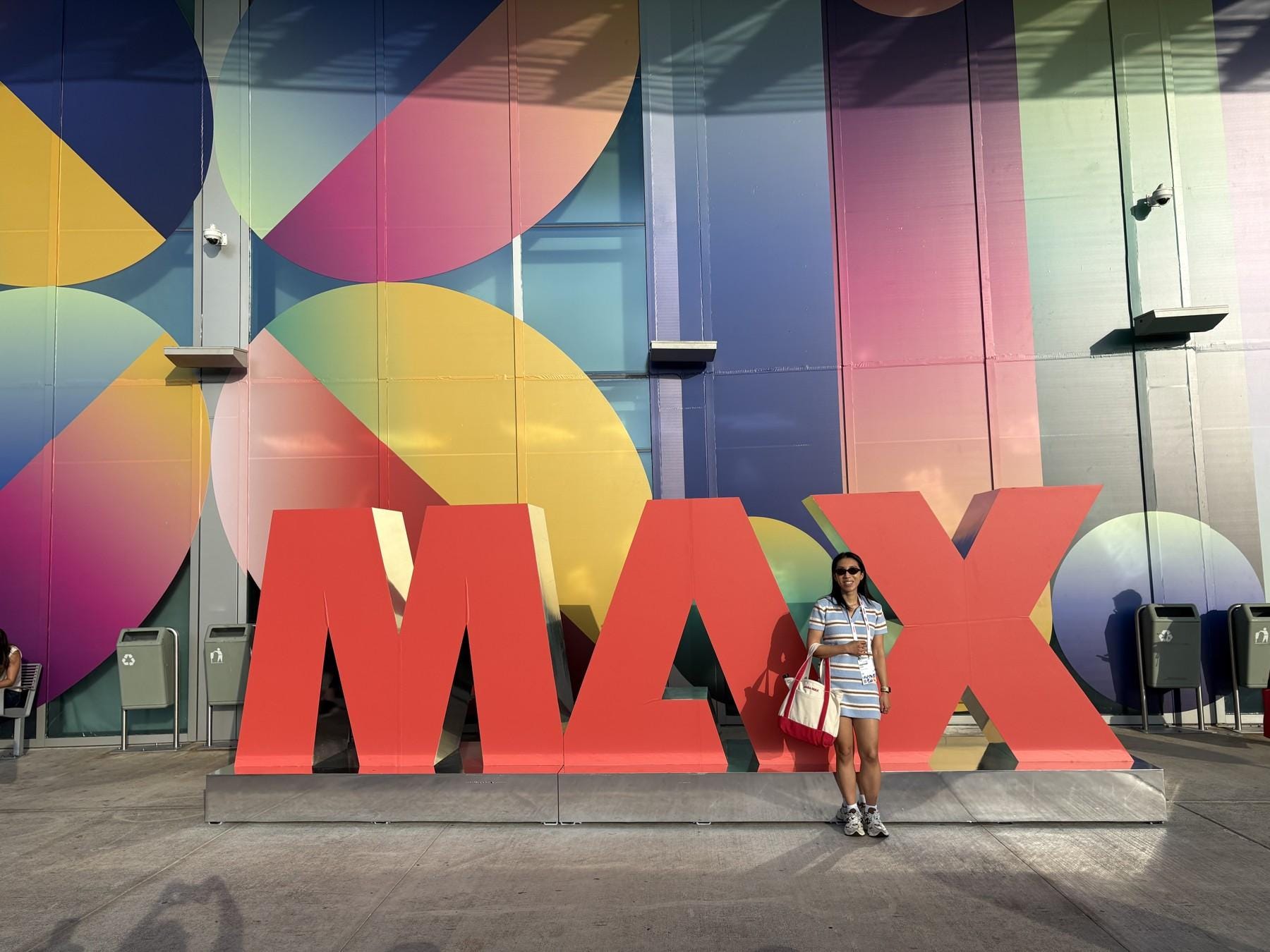
Last week, Adobe invited me to attend Adobe MAX, where I got to sit down and interview an SVP who spent over 20 years leading product and engineering across their flagship tools, including Photoshop.
It felt like a full-circle moment, especially with Adobe’s launch of their free Open for Business: Marketing Edition toolkit that gives new entrepreneurs a playbook for marketing and distribution they can plug into Adobe Express and Acrobat.
One stat in their launch announcement immediately caught my eye: 62% of US adults say they’d prefer to be their own boss (Shopify-Gallup survey).
This is something I see every day. Having built my own business over two years while working a 9-5 before leaving corporate two months ago, I hear constantly from people looking to make the leap, whether it’s a 10-year tech veteran wanting out or a college grad weighing a startup accelerator.
The 62% number didn’t surprise me. A separate measure is more sobering: according to the SBA Office of Advocacy, roughly half of new employer establishments close within five years.
That challenge is why I wanted to sit down with people who’ve had to solve this in the real world. While I was at MAX, I had 1-on-1 conversations with two people behind Adobe’s new launch to break down what it takes to build and market a viable business on your own:
Kristen Kish, chef, host of Top Chef, author of Accidentally on Purpose, and partner at Arlo Grey in Austin.
Govind Balakrishnan, Senior Vice President of Adobe, who has spent 20+ years at Adobe leading product and engineering across Photoshop, Premiere, and Acrobat.
My biggest takeaway? You can be incredible at your craft, but marketing, distribution, and taste are increasingly what make you stand out.
Here’s what I learned from them about building, marketing, and surviving out on your own, plus my 7 takeaways from attending Adobe MAX as a newly full-time entrepreneur and creator!
Why being good at your craft won’t save you: What new business owners are least prepared for when leaving a job, and where the first blind spots show up.
Why generic marketing gets ignored: How to build packaging, positioning, and taste into your work so you don’t blend into everyone using the same templates.
From specialized craft to commercial asset: How to build a business that pays you without being trapped running operations for 14 hours a day.
The visibility tax: Why believing “the work speaks for itself” is a trap, and how to get comfortable marketing your own perspective.
The operator lessons: Real takeaways on pricing, offer clarity, tool leverage, and why you can’t prompt an AI to do what you don’t understand.
Govind Balakrishnan (SVP and GM of Adobe Express) on the new solopreneur stack
Govind Balakrishnan has spent over two decades at Adobe overseeing flagship tools like Photoshop, Premiere, and Acrobat. Today, he leads Adobe Express, focusing on giving solo operators, freelancers, and small businesses the tools to build a brand without a dedicated marketing agency.
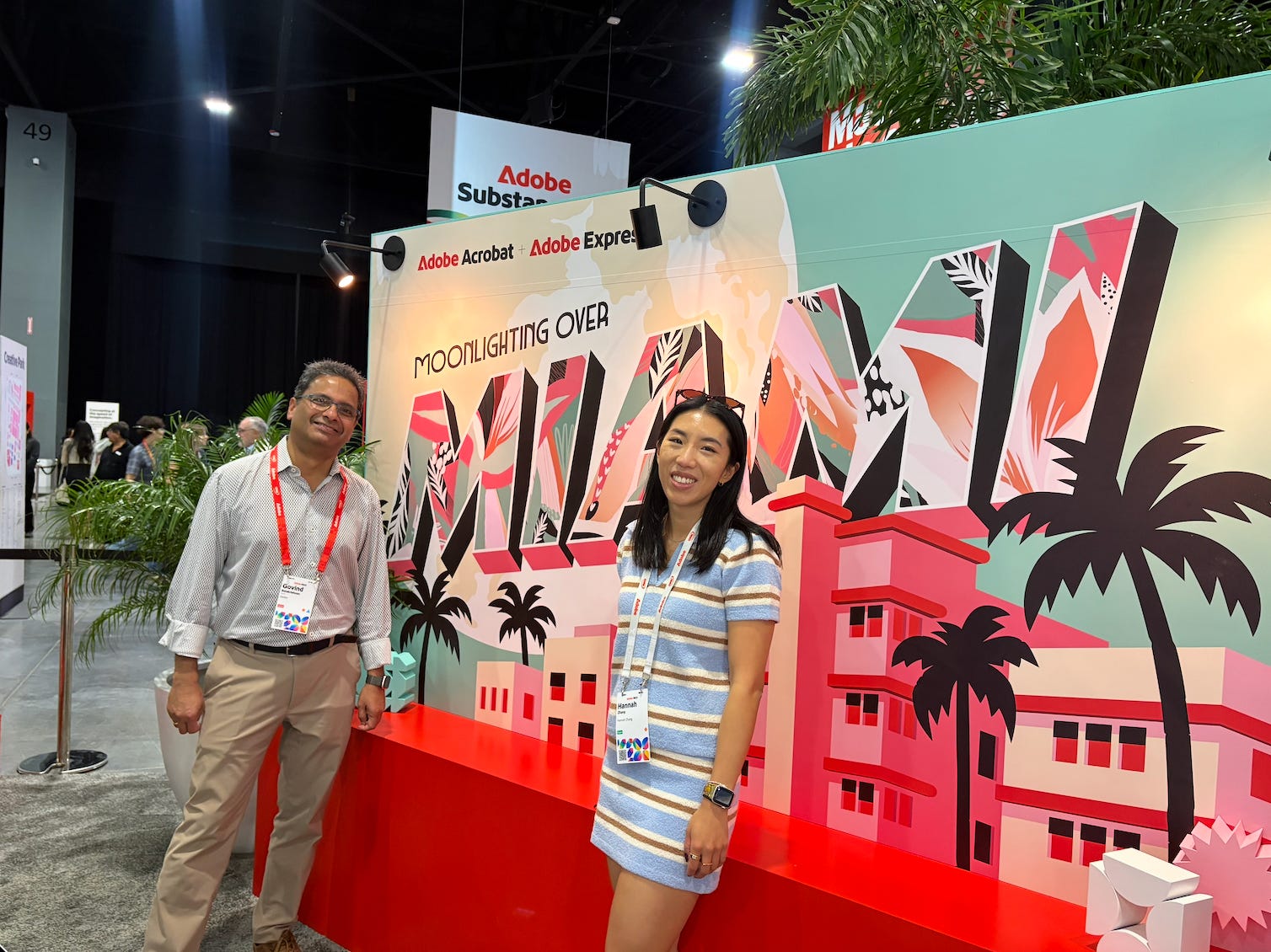
Hannah: Adobe just launched the Open for Business toolkit for small business owners. 62% of Americans say they’d rather work for themselves than someone else. I’m part of that 62% because I left my job two months ago to build full-time. What’s the biggest challenge you find new entrepreneurs aren’t prepared for?
Govind: That’s a brave decision to make, and one that a large number of people are making. The primary challenge most people encounter is the fear of the unknown. But there’s also not knowing what you don’t know. People get held back by blind spots because they’ve never tried it. And you can’t plan for blind spots.
Hannah: Does starting a business now mean you have to become a creator? What about a marketer?
Govind: Marketer, absolutely. If you’re a small business owner, you have to be discovered. If you aren’t discovered, there’s nothing you can do to grow your business. Creator is an interesting word because it comes down to definition. The traditional creator was the one moving pixels, opening Photoshop or Illustrator, and doing all the heavy manual lifting. Now, if you leverage AI tools where the software does most of the heavy lifting while you direct it, then yes, being an effective marketer and creator is how you succeed.
Hannah: For small business owners who are now all marketers (in some way), what are you seeing them do themselves versus outsource to AI, versus bringing in professional help for?
Govind: The business proposition is theirs. The idea is theirs. The passion they bring is theirs. Successful people invest heavily in what they’re good at and leverage tools for their blind spots. If you spend most of your time doing things you aren’t good at, chances are you aren’t going to succeed. Put your energy into your strengths and leverage complementary tools for the rest.
Hannah: How do you create content with AI without creating AI slop?
Govind: Your taste. It starts with you being convinced about your business proposition. But as you create content, if you can’t bring your human element to it, the content looks like everyone else’s. I was at a customer event where someone showed me a flyer marketing a Home Depot product, next to a flyer driving people to get vaccinations. I’m not kidding, they looked the same. They shouldn’t look the same at all.
Hannah: How do you develop that taste as a small business owner who has no background in design?
Govind: You have to decide what your business stands for. How do you want to communicate with your customers? How do you bring what’s unique about yourself? The challenge is to communicate that to the tools you’re using. If you don’t bring your own element, your taste, and your unique differentiation, it’ll look generic. Start with a professionally designed template and customize it so it speaks for you. It’s your projection to the outside world.
Hannah: What’s one of the coolest examples you’ve seen of a small business founder using AI?
Govind: Previously, the barrier to entry was immense. As a solopreneur, even with an amazing idea, you had to hire specialized people across market research, web design, copywriting, and analytics, which stopped people from taking the leap. AI has taken that barrier off the table. Successful businesses view AI as employee number one. It’s your co-founder sitting next to you. For brand identity, websites, marketing campaigns, and analytics, that’s where tools like Express step in.
Hannah: If someone wants to turn an idea or passion project into a business, what’s the first step they should take?
Govind: Identify your target customer. Then think about what’s different about your business and why that difference appeals to that customer. Only then do you think about brand kits, logos, and design elements to speak to them. If you don’t have clarity on the customer and the job to be done, nothing else works. It’s a crowded space; if 62% of people want to work for themselves, everyone has a business, but you need to clarify who you’re marketing to.
Hannah: Over your 20+ years at Adobe, how has the core user of your tools shifted?
Govind: It’s lowered the barrier to entry to creativity in a meaningful way. Now it comes down to how well you can communicate what you want to do and your eye for what good looks like. The barrier to creativity is lower, but the bar we set as individuals for what we consider good content has actually gotten higher. The only way you stand out is by putting time and energy into making your content distinct. The risk is that people think they can just send in a prompt, get something back, and be done. It doesn’t work. Garbage in, garbage out.
Celebrity Chef Kristen Kish on developing a POV, visibility, and letting go of ego
Kristen Kish won Season 10 of Top Chef, authored the memoir Accidentally on Purpose, founded restaurant Arlo Grey in Austin, and now hosts Top Chef. Her career spans over two decades of refining her culinary craft and learning to build a business around it.
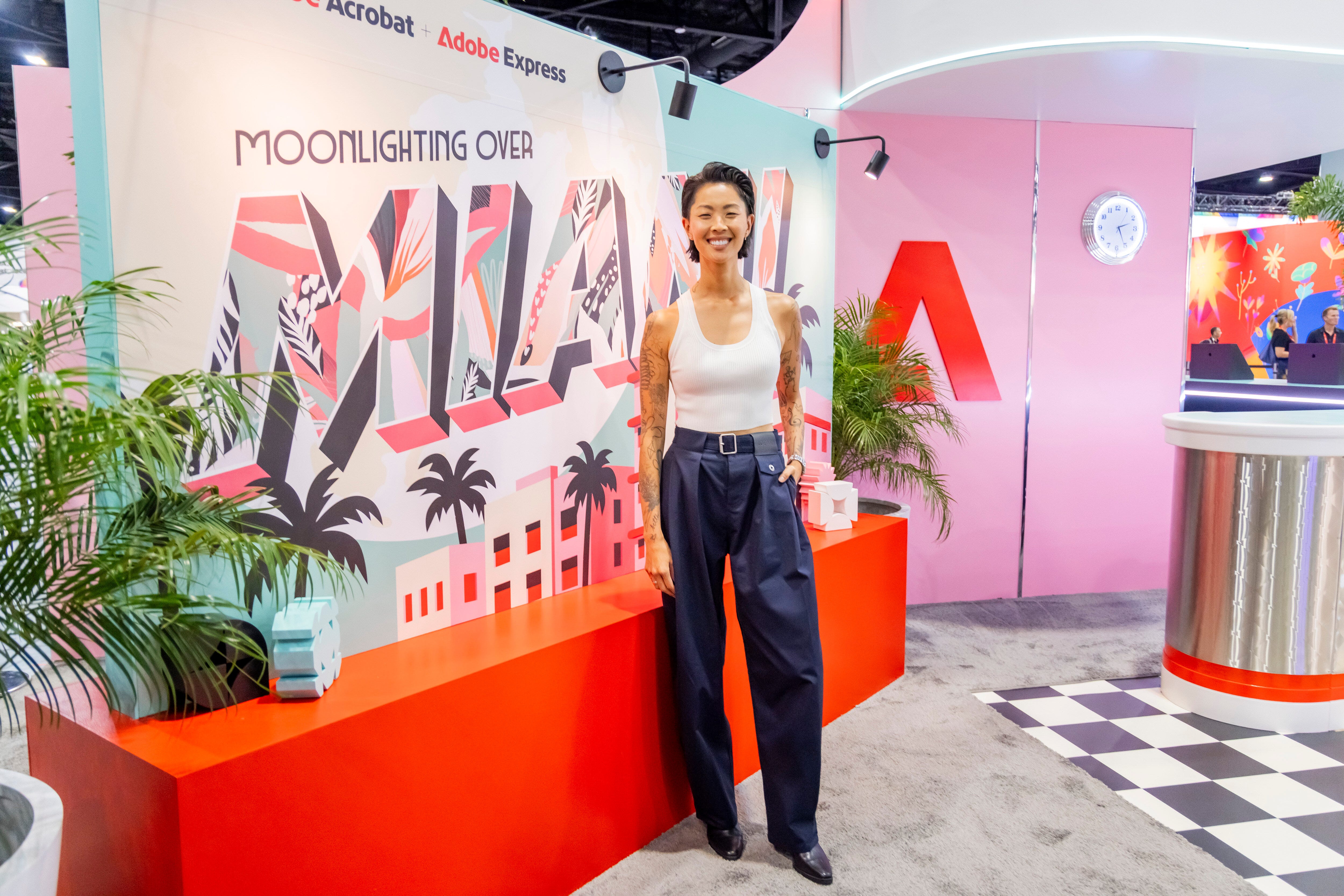
Hannah: You were cooking for a long time before you became a business owner. What were you most unprepared for when you first became an entrepreneur?
Kristen: In the beginning, you’re learning through raw experience. You realize what you need, what you don’t need, and what you’re good at. Over two decades later, I feel sure of myself. But back then, what I was missing was resources, understanding what networking and marketing myself looked like, and finding the confidence to stand in my own power. To say, “I am my business,” instead of second-guessing myself or constantly comparing my path to what someone else’s line of success looked like. The short answer: I was missing my confidence.
Hannah: You recently said that one of your biggest horror stories is people not having their own point of view. How did you turn cooking into your distinct point of view and into a business?
Kristen: I started imparting my personal story. To understand how I cook and my trade, you have to understand who I am outside of cooking: where I came from, and things that inspire me that have nothing to do with food. That’s the differentiating factor. There are so many chefs and celebrity chefs out there. The most interesting part of those people is who they are as human beings, not just as chefs. That’s the heart of great food.
Hannah: Your memoir is called Accidentally on Purpose. What does that mean in the context of your career?
Kristen: The title came after we wrote the book. Every time my co-writer and I looked back on the stories, everything happened a little bit on accident, and I just decided to make purpose out of it. Some people have a rigid roadmap and follow a business plan to a T. For me, I have a direction, but I don’t shut myself off from opportunities. As humans, we evolve every year. New experiences bring different knowledge; mistakes teach us how to do things differently next time. All those things happened by accident, and I found the purpose within them.
Hannah: When someone has a craft, expertise, or idea, what’s the first step to turning it into a business?
Kristen: You have to start trying things on for size. I can’t give a single prescriptive first step. You try everything and throw things at the wall. When I create dishes, I test constantly. A lot of things don’t work. But within all that experimentation, you find what sticks. When you’re starting out, you have financial responsibilities, but the best part of being new is that you get to try different things on to see what works for you.
Hannah: What was an early mistake you made around perfectionism and marketing?
Kristen: When I first opened my restaurant, I came straight from fine dining where everything was precise and executed to satisfy bosses. I thought I had to cook the most perfect, mind-blowing food no one had ever seen. It was good, but it stripped the joy out of cooking for me. I thought, If I’m opening something on my own terms, why am I still cooking like them? So I leaned into comfort food rooted in my humble Midwestern background. It wasn’t what people expected in fine dining. I learned quickly that I’d been cooking with ego instead of the joy that made me love cooking in the first place. Perfection isn’t the goal. When everyone is doing fancy, polished work, doing something grounded makes people take notice.
Hannah: You manage a kitchen, run restaurants, host TV, and publish books. How do you manage shapeshifting across so many different roles?
Kristen: I realized I’m good at being good at a lot of different things. Some days I’m in the kitchen for 14 hours with a backwards hat, dirty apron, and bare face, sweating over prep. The next day I’m on television in full glam, delivering lines. I’ve gotten comfortable bouncing between those worlds. Over the last two weeks, I had eight different jobs that each required something completely different from me. The asset of being my own business is that I can operate across all of them.
Hannah: How did you go from an introverted cook hiding in the kitchen to hosting on national television?
Kristen: Trying things and saying yes. Early on, I thought hiding in the back of a kitchen cooking food was going to be the rest of my life. Imagine a young, shy, anxious cook being offered a spot on television. It started when I took a job cooking in front of just ten guests. The first day, my hands shook so badly because I was terrified of being seen. I just wanted my food to speak for itself. But I took the shove because I knew I needed to work on social interaction. That ten-seat counter led to competing on Top Chef, which led to other shows, and eventually to hosting Top Chef. It was a snowball of saying yes and doing the personal work to build confidence.
Hannah: That idea of “wanting the work to speak for itself” is something so many people struggle with, especially women and operators coming from corporate. Why is visibility so necessary?
Kristen: We want human connection. The products and businesses I support are driven by the people behind them. I could go to a restaurant just because people say it’s good, but more often, I choose to support the person behind the business. You have to let people see who you are.
My 7 takeaways from Adobe MAX
1. You can’t direct what you don’t understand
During the opening keynote, I watched creators demo Photoshop and Adobe Firefly live. The popular claim that “AI can just design everything” fell apart immediately. They were prompting, but with specific technical language: blend modes, screen settings, and layer structures. You have to know the vocabulary of the craft to get anything usable back. Prompting doesn’t replace foundational knowledge; it just tests whether you know how to direct the output.
2. When everyone runs toward identical AI templates, run toward taste
Govind shared a story from a customer event where a flyer for a Home Depot product and a flyer driving people to get vaccinations looked completely identical. When the friction to generate content drops to zero, generic templates flood the market. The only real differentiator is having a distinct point of view. But taste isn’t abstract: it comes down to knowing your audience deeply enough to understand what will actually resonate with them versus what looks like generated noise.
3. Business is the “container” that protects your craft
Kristen spent years cooking in kitchens before realizing that building a sustainable business wasn’t about cooking with ego or executing someone else’s fine-dining playbook. It was about creating a commercial structure (books, television, partnerships) that gave her the freedom to cook on her own terms.
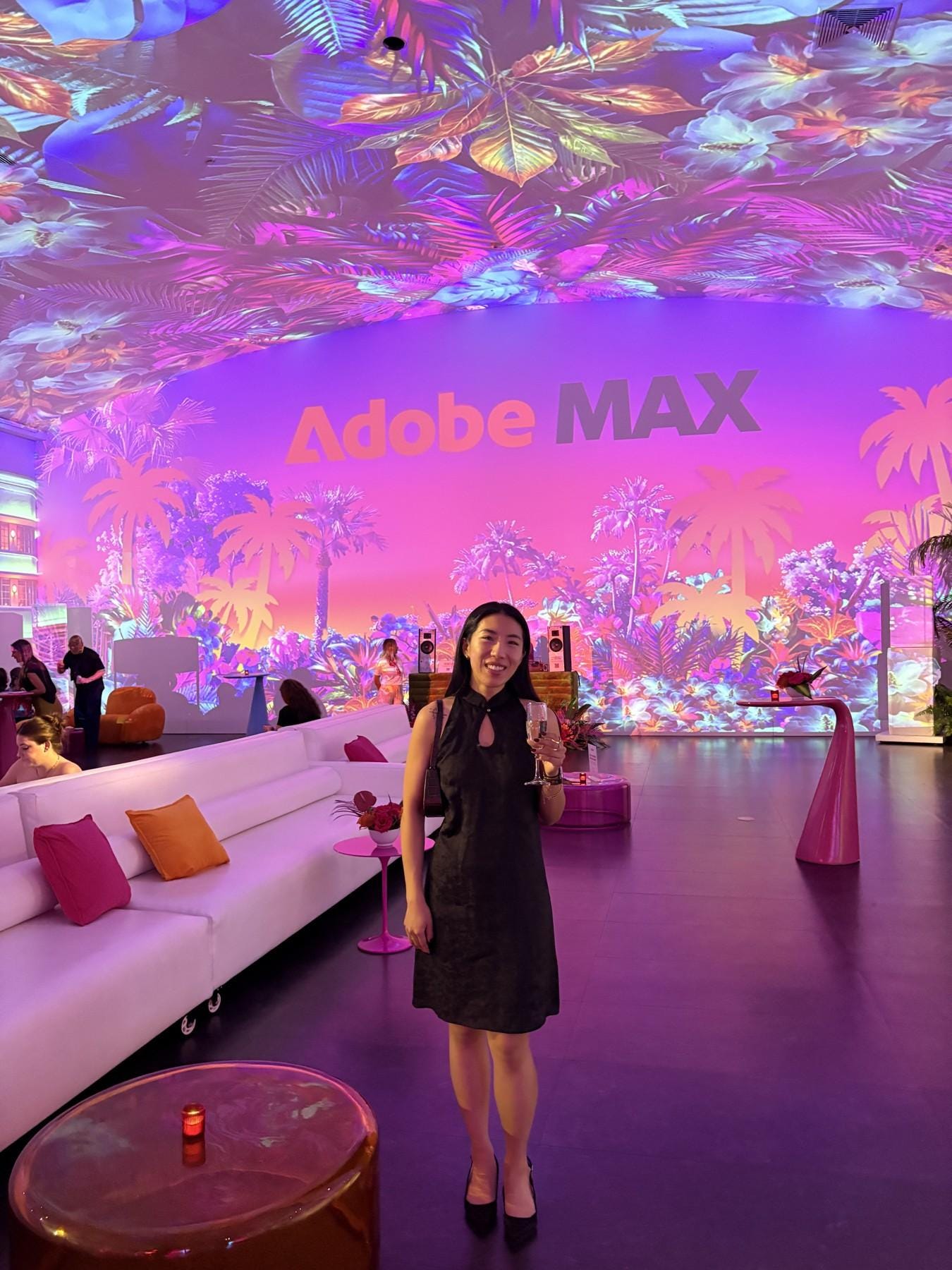
4. Is content your product, or is content your marketing?
This came up in conversation with another creator at MAX: there are two distinct types of creators, and confusing them will break your business model.
The first type uses tools like InDesign because the creative file itself is the billable product they sell to clients.
The second type uses tools like Express because content is purely the distribution engine to sell a separate product or service.
Knowing which one you are stops you from wasting 20 hours a week over-engineering assets that were only meant to drive distribution.
5. Immersion beats simulation: The Moonlight Diner
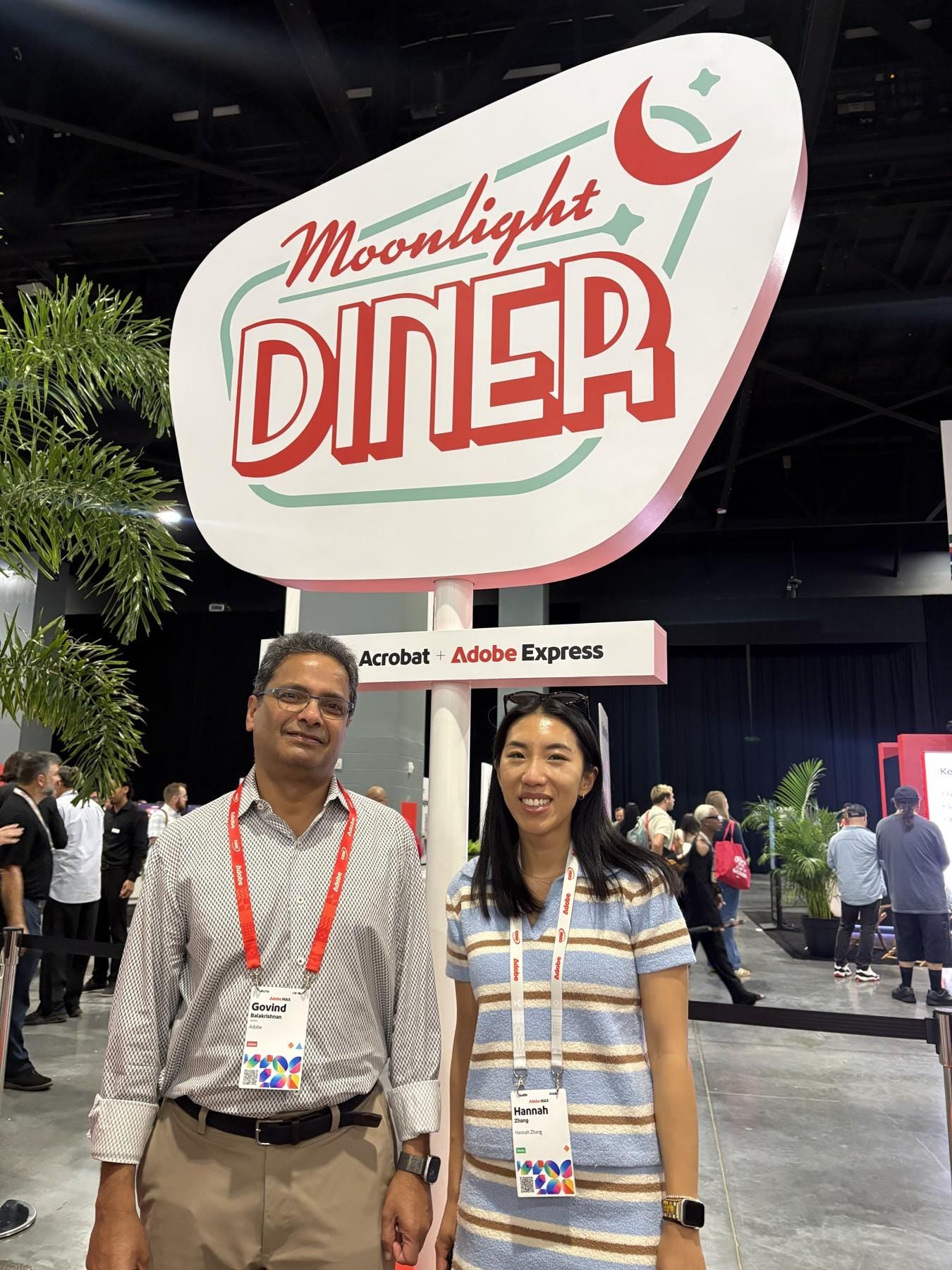
One of my favorite exhibits on the floor was the Moonlight Diner activation. Adobe built a retro diner and challenged attendees to take a struggling local dirty soda shop and turn the business around using Express and Acrobat. It was a live study in blending brand and product marketing: you have to solve the business positioning first (the offer, the audience, the unit economics), then bring in creative execution to make it memorable.
6. The barrier to entry dropped, but the quality bar went up
AI made generating a baseline asset effortless. But as Govind pointed out, that only raised the bar for what people consider worth consuming. Walking the floor at MAX, the tools and automations were everywhere, but the focus was entirely on high production value. That is what Adobe looks for in its featured creators: people using tools to hit a higher creative standard, not churn out shortcuts. Blasting generic volume burns your audience; the real leverage is pairing new speed with serious standards.
7. Visibility doesn’t happen by accident
Kristen told me she was curious if her advice would resonate, given she hasn’t spent time in corporate. But despite coming from completely different backgrounds, we landed on the exact same takeaway on visibility, completely unprompted.
Earlier in her career, she wanted to believe her food would simply speak for itself from the back of the kitchen. But staying hidden behind the line doesn’t build a sustainable business. Putting yourself in front of people, pitching your perspective, and saying yes to visibility is part of the job.
I love these insights, thank you for sharing. My favorite is that while the barrier for entry is lower, the quality needs to be higher than ever.
Such an awesome piece, Hannah!!