


Hi, I’m Hannah! Welcome to Nonlinear News, where I write for smart, ambitious people choosing the nonlinear path.
I shared a post last week called “How I use AI to create for a 350K+ audience without losing my voice.”
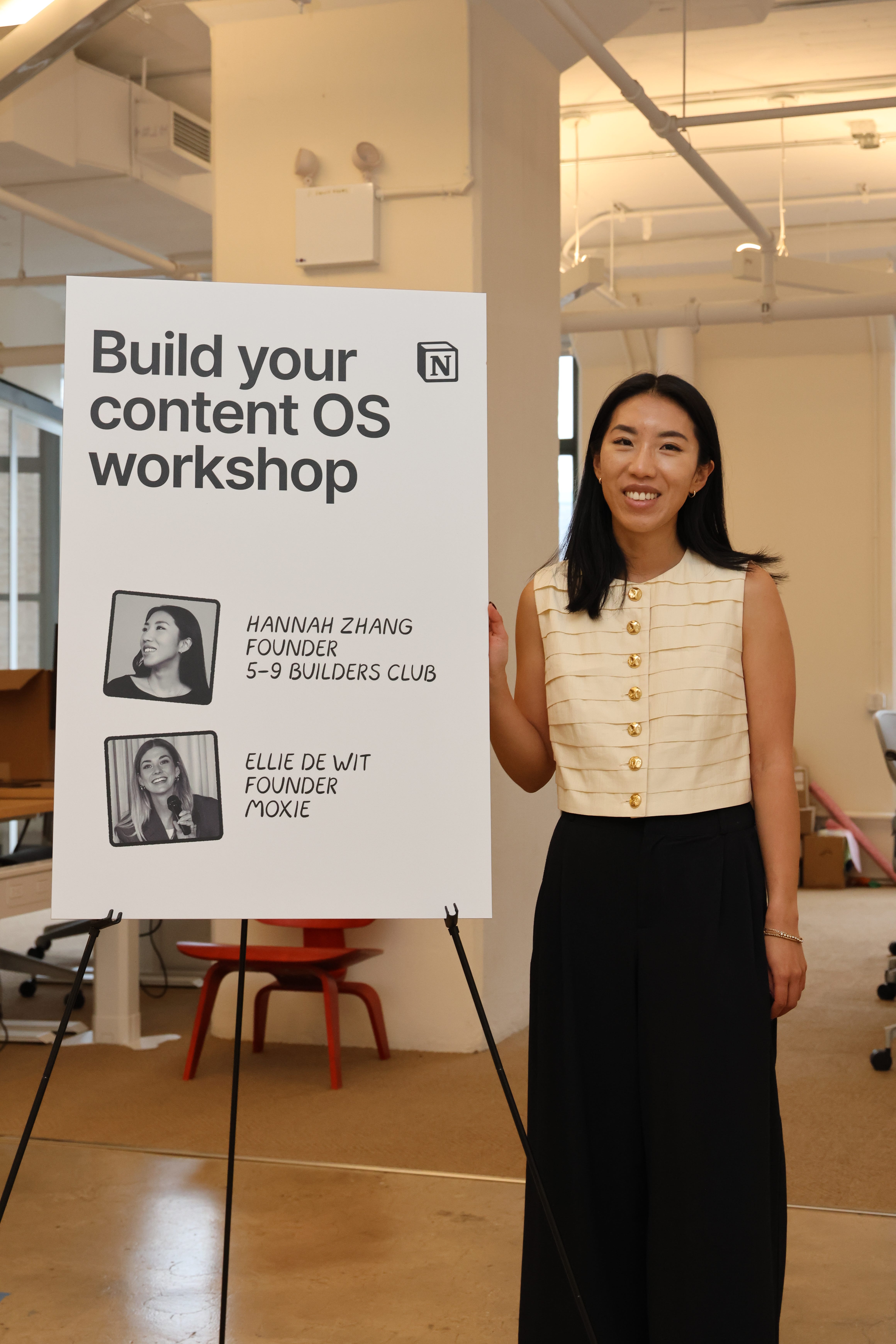
This week, I hosted an in-person workshop with Notion to help people build their Content OS with Notion AI. (We all built an AI skill for writing video scripts, which I’ll of course share below)
There’s endless content on social media, the news, and even Substack from people talking about how they replaced entire marketing teams with AI, or how they use AI to write all their newsletters.
I sometimes fear I’ve contributed to this epidemic, whether it’s talking about my AI creator tool stack, how I built my second brain, or the AI skill I used to make a prioritization plan as a multi-passionate business builder.
You might look at all of this and think a lot of creators and entrepreneurs, including me, are using AI to do everything and that you need to be an AI wizard to create or build.
Or worse, you think that building a business and brand is easy now with AI and you can let it do all the heavy lifting while you sit back, relax, and collect a check.
I’m one of the most “AI-pilled” people you’ll meet. I spend $200 a month on ChatGPT and ramble constantly to my personal agents via Wispr Flow. I encourage people to use AI to write posts, send emails, and manage operations.
I realize that when I talk about the AI tools I use, it can sound like they’re the reason I’ve built an audience and a business rather than the amplifiers.
My creative business is on track to generate more than 3x my 9-5 salary this year. While AI helps me run it, the foundations of the content and personal brand have very little to do with AI: a point of view, a distinctive editorial voice, and consistent execution.
They feed each other. Posting gives you practice expressing your ideas, and the conversations with your audience help you figure out which ones are worth developing further.
For me, the hardest part was articulating my point of view. I was already posting consistently and had a voice people recognized, but I was still figuring out what I believed across all the subjects I talked about, and why you’d want to keep hearing from me.
At 100K followers, I was still posting about a lot of different things without a clear reason for someone to follow me. Getting clearer on my POV and what I wanted to be known for helped me turn that audience into:
A multiple-six-figure business through brand partnerships, private clients, and this newsletter.
Paid partnerships with OpenAI, Anthropic, and LinkedIn to share my perspective and teach people how to use their products.
Weekly inbound messages about senior marketing roles I used to get auto-rejected from.
Invitations to speak at conferences like HubSpot UNBOUND and Create & Cultivate about the work I’m doing and the ideas I share here.
So I want to share how I’ve been working out my own POV, including the posts and experiments that helped me get more specific about what I wanted to say. If you’re interested in several things and struggling to explain what connects them, a lot of this will probably feel familiar.
This won’t magically give you a personal brand, because a personal brand is…well, personal. But it’ll give you somewhere to start beyond asking AI what to post and expecting it to build you a brand.
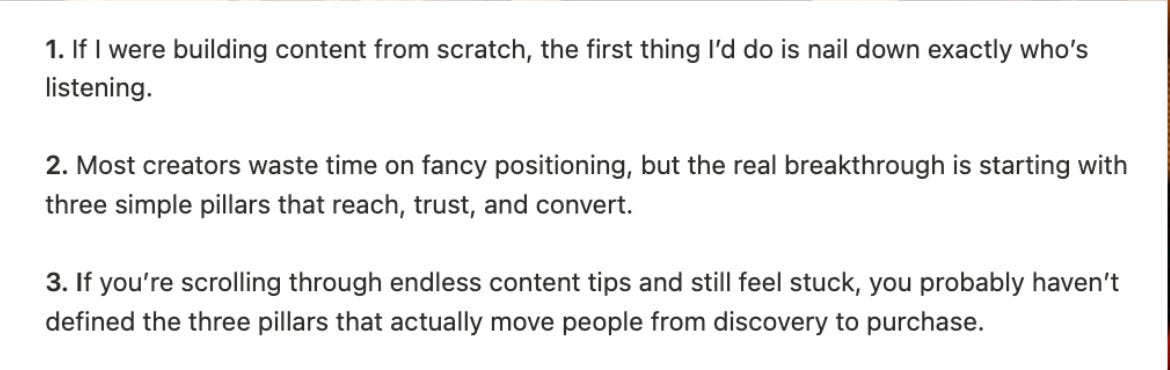
Once you have that material to work with, then you can GO CRAZY with AI to refine, amplify, and occasionally go back to rework the foundations. For example, I turned two years of my best-performing video scripts into a reel writing that suggests hooks like these:
Today, I’m getting into how I developed a a Point of View you recognize across everything I post and every channel, so you’re following how I think, not just the topics I discuss:
Why I plateaued at 100K followers despite posting consistently, and what was missing from all the videos, Linkedin posts, and Substacks I was pumping out.
How “nonlinear career” went from describing my messy resume to a POV that connects my content about careers, business, and AI.
Six practices for developing opinions you can explain and support, including what corporate feedback taught me to stop saying.
One simple exercise for turning something you read into a take worth sharing, with an example from my own AI content.
The short video script writing skill you can adapt for your content, once you know what you want to say! (Because no, this post isn’t anti AI)
